
Mouse Secondary Antibodies

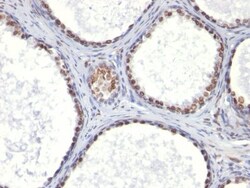
Biotium CD41a(ITGA2B/1036), CF568 conjugate, 0.1mg/mL
Reacts with a calcium-dependent complex of CD41/CD61, a dimer of 90 kDa and 140 kDa present on the membrane of normal platelets and megakaryocytes. CD41/CD61 is also known as platelet glycoprotein GPIIb/GPIIIa or integrin IIa/3. This complex is the receptor of fibrinogen, fibronectin and von Willebrand factor, and mediates platelet adhesion and aggregation.Primary antibodies are available purified, or with a selection of fluorescent CF Dyes and other labels. CF Dyes offer exceptional brightness and photostability. Note: Conjugates of blue fluorescent dyes like CF405S and CF405M are not recommended for detecting low abundance targets, because blue dyes have lower fluorescence and can give higher non-specific background than other dye colors.

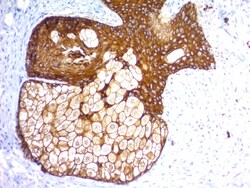
Biotium Cytokeratin, pan (Epithelial Marker) (KRTH/1576R + KRTL/1577R), 0.2mg/mL
Twenty human keratins are resolved with two-dimensional gel electrophoresis into acidic (pI <5.7) and basic (pI >6.0) subfamilies. This antibody cocktail recognizes acidic (Type I or LMW) and basic (Type II or HMW) cytokeratins, which 67 kDa (CK1); 64 kDa (CK3); 59 kDa (CK4); 58 kDa (CK5); 56 kDa (CK6); 52 kDa (CK8); 56.5 kDa (CK10); 50 kDa (CK14); 50 kDa (CK15); 48 kDa (CK16); 40 kDa (CK19). Many studies have shown the usefulness of keratins as markers in cancer research and tumor diagnosis. It is a broad spectrum anti pan-cytokeratin antibody cocktail, which differentiates epithelial tumors from non-epithelial tumors e.g. squamous vs. adenocarcinoma of the lung, liver carcinoma, breast cancer, and esophageal cancer. It may be useful to characterize the source of various neoplasms and to study the distribution of cytokeratin containing cells in epithelia during normal development and during the development of epithelial neoplasms. This antibody stains cytokeratins pres
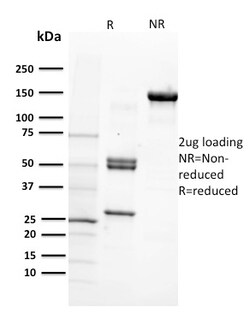
Biotium CD29 (Stem Cell Marker)(12G10), CF568 conjugate, 0.1mg/mL
Recognizes CD29. Binds to the cell membrane of T- and B- lymphocytes, monocytes, platelets, fibroblasts, endothelial cells, mast cells and smooth muscle cells. CD29 is an adhesion receptor and co-stimulatory molecule. This antigen was initially characterized as GPIIa on platelets and as the common b1 subunit of the very late antigen (VLA) protein family. CD29 forms a non-covalent heterodimeric complex with integrin alpha subunits. It also mediates adhesion to invasion and thrombospondin. Primary antibodies are available purified, or with a selection of fluorescent CF Dyes and other labels. CF Dyes offer exceptional brightness and photostability. Note: Conjugates of blue fluorescent dyes like CF405S and CF405M are not recommended for detecting low abundance targets, because blue dyes have lower fluorescence and can give higher non-specific background than other dye colors.
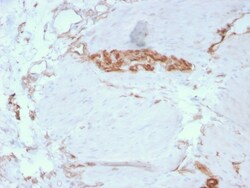
Biotium Fodrin / Alpha Spectrin II (SPTAN1) / NEAS(SPTAN1/3351), CF740 conjugate, 0.1mg/mL
Spectrin, an actin binding protein that is a major component of the cytoskeletal superstructure of the erythrocyte plasma membrane, is essential in determining the properties of the membrane including its shape and deformability. Spectrins function as membrane organizers and stabilizers, composed of nonhomologous and chains, which aggregate side-to-side in an antiparallel fashion to form dimers, tetramers, and higher polymers. Spectrin I and spectrin I are present in erythrocytes, whereas spectrin II (also designated fodrin ) and spectrin II (also designated fodrin ) are present in other somatic cells. The spectrin tetramers in erythrocytes act as barriers to lateral diffusion, but spectrin dimers seem to lack this function. Activation of calpain results in the breakdown of spectrin II, a neuronal cytoskeleton protein. Primary antibodies are available purified, or with a selection of fluorescent CF Dyes and other labels. CF Dyes offer exceptional brightness and photostabili
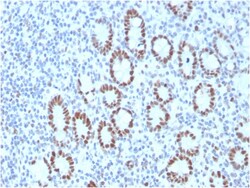
Biotium MSH6 (DNA Mismatch Repair Protein)(MSH6/3089), CF488A conjugate, 0.1mg/mL
The finding that mutations in DNA mismatch repair genes are associated with hereditary nonpolyposis colorectal cancer (HNPCC) has resulted in considerable interest in the understanding of the mechanism of DNA mismatch repair. Initially, inherited mutations in the MSH2 and MLH1 homologs of the bacterial DNA mismatch repair genes mutS and mutL were demonstrated at high frequency in HNPCC and were shown to be associated with microsatellite instability. A member of the mismatch repair family, GTBP (also designated MSH6), is an MSH2-related protein that binds to DNA containing G/T mismatches. Findings suggest that the mismatch-binding factor in human cells is composed of a heterodimer of GTBP and MSH2. Primary antibodies are available purified, or with a selection of fluorescent CF Dyes and other labels. CF Dyes offer exceptional brightness and photostability. Note: Conjugates of blue fluorescent dyes like CF405S and CF405M are not recommended for detecting low abundance targ
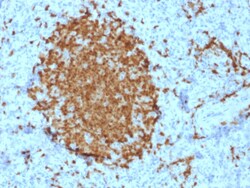
Biotium BOB.1 (B-Cell Marker)(BOB1/2421), 1mg/mL
BOB-1 is a transcriptional coactivator that specifically associates with either POU2F1/OCT1 or POU2F2/OCT2, boosting the promoter activity of those complexes. It is essential for the response of B-cells to antigens, required for the formation of germinal centers, and regilates IL-6 expression. BOB-1 expression in a variety of established B-cell lines, representing different stages of B-cell development, has suggested a constitutive, B-cell-specific expression pattern. LP cells in nodular lymphocyte predominant Hodgkin lymphoma, because they are germinal center-derived, are consistently immuno-positive for BOB-1. Conversely, only some cases of classical Hodgkin lymphoma show BOB-1 immuno-reactivity within the Hodgkin and Reed-Sternberg cells. Expression of BOB-1 has been reported in follicular center cell lymphoma, diffuse large B-cell lymphoma and some cases of acute myeloid leukemia. B-CLL, marginal zone lymphoma, and mantle cell lymphoma may show weak to moderate immunoreactivit
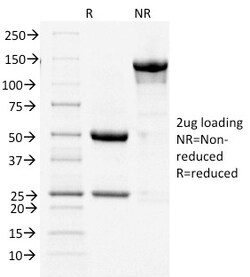
Biotium Cycloxygenase-2 (COX-2)(COX2/1941), CF568 conjugate, 0.1mg/mL
Prostaglandins are a diverse group of autocrine and paracrine hormones that mediate many cellular and physiologic processes. Prostaglandin H2 (PGH2) is an intermediate molecule in formation of the prostaglandins. Cyclooxygenase-1 (Cox-1) and cyclooxygenase-2 (Cox-2) are prostaglandin synthases that catalyze the formation of PGH2 from arachidonic acid (AA). Cox-1 and Cox-2 are isozymes of prostaglandin-endoperoxidase synthase (PTGS). Cox-1 is constitutively expressed in most tissues and is thought to serve in general housekeeping functions. Cox-2 is efficiently induced in migratory cells responding to pro-inflammatory stimuli and is considered to be an important mediator of inflammation. Both enzymes are targets for the nonsteroidal therapeutic anti-inflammatory drugs, NSAIDs. COX2 expression is significantly increased in 85-90% of human colorectal adenocarcinomas whereas levels of COX-1 are not changed. Primary antibodies are available purified, or with a selection of fluorescent
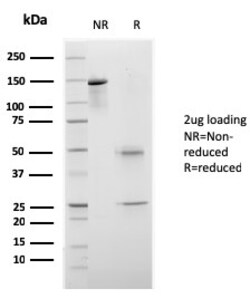
Biotium CELA3B / ELA3B (Pancreatic Function Marker)(rCELA3B/1811), 1mg/mL
This MAb recognizes a protein of ~30 kDa, identified as CELA3B (Chymotrypsin like elastase family member 3B). Elastases form a subfamily of serine proteases that hydrolyze many proteins in addition to elastin. Humans have six elastase genes which encode the structurally similar proteins elastase 1, 2, 2A, 2B, 3A, and 3B. Unlike other elastases, elastase 3B has little elastolytic activity. Like most of the human elastases, elastase 3B is secreted from the pancreas as a zymogen and, like other serine proteases such as trypsin, chymotrypsin and kallikrein; it has a digestive function in the intestine. Elastase 3B preferentially cleaves proteins after alanine residues. Elastase 3B may also function in the intestinal transport and metabolism of cholesterol. Both elastase 3A and elastase 3B have been referred to as protease E and as elastase 1, and excretion of this protein in fecal material is frequently used as a measure of pancreatic function. Primary antibodies are available pu
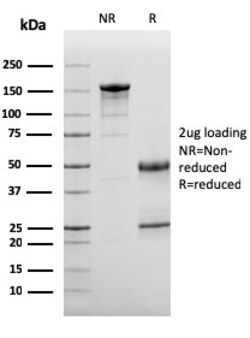
Biotium Complement 3d (C3d) (Acute Humoral Rejection Marker)(C3D/2891), Biotin conjugate, 0.1mg/mL
The complement component proteins, C2, C3, C4 and C5, are potent anaphylatoxins that are released during complement activation. Binding of these proteins to their respective G protein-coupled receptors, C3aR, C1R and C5aR, induces proinflammatory events, such as cellular degranulation, smooth muscle contraction, arachidonic acid metabolism, cytokine release, leukocyte activation and cellular chemotaxis. C3d is a terminal degradation product of C3 that plays an important role in modulation of the adaptive immune response through the interaction with complement receptor type 2 (CR2). CR2 is important in the switched-isotype, high-affinity and memory humoral immune responses to T-dependent foreign antigens, as well as in the development of the natural antibody repertoire. This pH- and ionic strength-dependent association of C3d with CR2 represents a link between innate and adaptive immunity. Primary antibodies are available purified, or with a selection of fluorescent CF Dyes a
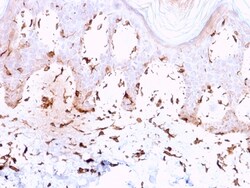
Biotium Collagen VII(LH7.2), 0.2mg/mL
Recognizes an epitope located on collagenase digested Type VII collagen (150 kDa), i. e. the non-helical carboxyl terminal region of the dimer. Binding is localized at the inferior border of the lamina densa as demonstrated by immunoelectron microscopy. Type VII is also found in the retina, where its function is unknown. It interacts with Laminin 5 and Fibronectin. Collagen VII is a stratified squamous epithelial basement membrane protein that forms anchoring fibrils which may contribute to epithelial basement membrane organization and adherence by interacting with extracellular matrix (ECM) proteins such as type IV collagen. Primary antibodies are available purified, or with a selection of fluorescent CF Dyes and other labels. CF Dyes offer exceptional brightness and photostability. Note: Conjugates of blue fluorescent dyes like CF405S and CF405M are not recommended for detecting low abundance targets, because blue dyes have lower fluorescence and can give higher non-specifi

Biotium Desmoglein-1 (DSG1) (18D4), CF568 conjugate, 0.1mg/mL
This antibody recognizes a protein of ~150 kDa, identified as Desmoglein-1 (DSG1). Desmoglein-1 is a member of the desmosomal cadherin family. Desmosomes are intercellular adhering junctions that represent cell surface attachment sites for intermediate filament. Desmocollins and desmogleins are the main desmosomal transmembrane proteins. Desmogleins consist of Dsg1, Dsg2, Dsg3, and Dsg4 isoforms. Within the desmosome, the extracellular domain of desmoglein is essential for calcium dependent heterophilic binding to the desmocollins, whereas the intracellular domain is essential for binding to the desmosomal plaque protein, plakoglobin. Desmoglein 1 is synthesized exclusively in the suprabasal layers. Intact and functionally active desmoglein 1 is essential to epidermal integrity.Primary antibodies are available purified, or with a selection of fluorescent CF Dyes and other labels. CF Dyes offer exceptional brightness and photostability. Note: Conjugates of blue fluorescent

Biotium CD11c (Dendritic Cell Marker) ( ITGAX/1243) , CF647 conjugate, 0.1mg/mL
This antibody recognizes a protein of 145 kDa, identified as CD11c. CD11c (ITGAX), a member of the leukointegrin family, shares the same beta subunit with other members of the leukocyte adhesion molecule family, which includes CD11a (LFA-1), CD11b (MAC-1) and CD11d (ITGAD), but has a unique alpha chain. CD11c has been shown to play a role in phagocytosis, cell migration, and cytokine production by monocytes/macrophages as well as induction of T-cell proliferation by Langerhans cells. CD11c is expressed prominently on the plasma membranes of monocytes, tissue macrophages, NK cells, and most dendritic cells (DCs). A lower level of expression is also observed on neutrophils as a result of its high level of expression on most DCs. An antibody to CD11c may aid in identification of lesions with histiocytic origin. It may also been used as a marker for hairy cell leukemia in paraffin-embedded tissues.Primary antibodies are available purified, or with a selection of fluorescent CF Dyes a

Biotium DNA Ligase 1(1A9), CF568 conjugate, 0.1mg/mL
DNA Ligase I maintains the major DNA Ligase activity in proliferating cells by joining Okazaki fragments during lagging strand DNA replication. Human DNA Ligase I also has an essential role in DNA repair pathways, where it catalyzes the formation of phosphodiester bonds between adjacent 5' phosphoryl and 3' hydroxy termini at single breaks in duplex DNA molecules. In addition, DNA Ligase I plays a role in sealing nicks during excision repair. Similar to other DNA ligases, DNA Ligase I is built around a common catalytic core. Increased levels of DNA Ligase I are found in human tumors, as compared to benign tissues, as well as in peripheral blood lymphocytes. DNA Ligase I activity is altered in the chromosomal breakage deficit Bloom's syndrome (BS). Individuals with BS either have decreased levels of abnormally thermolabile DNA Ligase I or possess a dimeric form of this enzyme. Primary antibodies are available purified, or with a selection of fluorescent CF Dyes and other labels. C
Biotium Desmoglein-3 (Squamous Cell Marker) (DSG3/1535), 0.2mg/mL
This antibody recognizes a protein of 130 kDa, identified as Desmoglein-3 (DSG3). This MAb is highly specific to Desmoglein-3 and does not cross-react with other members of the Desmoglein-family. DSG3 is a calcium-binding transmembrane glycoprotein component of desmosomes in vertebrate epithelial cells. Research has shown that DSG3 has a very high sensitivity (>80%) and specificity (100%) in recognizing squamous cell carcinoma (SqCC). Therefore, DSG3 is considered a very important marker for lung SqCC and can be a useful ancillary marker to separate SqCC from other subtypes of lung cancer. Moreover, studies have shown that DSG3 expression in lung SqCC may indicate a poor prognosis.Primary antibodies are available purified, or with a selection of fluorescent CF Dyes and other labels. CF Dyes offer exceptional brightness and photostability. Note: Conjugates of blue fluorescent dyes like CF405S and CF405M are not recommended for detecting low abundance targets, because blue
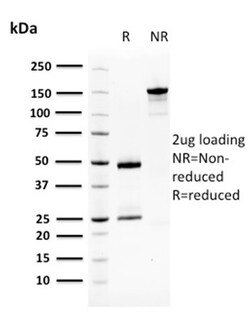
Biotium Squamous Cell Carcinoma Antigen 1(CPTC-SERPINB3-2), CF740 conjugate, 0.1mg/mL
Metastasis of a primary tumor to a distant site is determined through signaling cascades that break down interactions between the cell and extracellular matrix proteins. Among the proteins mediating metastasis are serine proteases, such as neutrophil elastase. Serpins are family of serine protease inhibitors, contain a stretch of peptide that mimics a true substrate for a corresponding serine protease. Serine proteases bind to this substrate mimic in a 1:1 stoichiometric fashion and become catalytically inactive. Aberrant expression of serpin family members can contribute to a number of conditions, including emphysema (-1 antitrypsin deficiency), fatal bleeding (elastase to Thrombin specificity) and thrombosis (antithrombin deficiency), and are indicators of cancer stage phenotypes (circulating levels of squamous cell carcinoma antigen, known as SCCA1, increase in advancing stages of some cervical, lung, esophageal and head and neck cancers). SCCA1 expression has been demonstrated